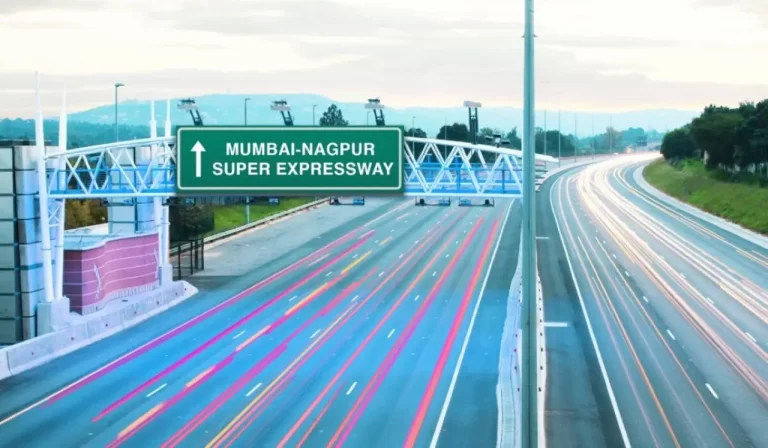
One of the earliest large-scale infrastructure initiatives launched after Devendra Fadnavis assumed office as Chief Minister was the construction of a vital expressway connecting Nagpur and Mumbai. The vision behind this ambitious corridor was not merely to shorten travel time between the two cities, but to stimulate economic activity across vast stretches of interior Maharashtra, unlocking new opportunities for trade, industry, and regional development.This high-impact project was designed to bring the state’s hinterland into the mainstream of growth by improving connectivity, attracting investment, and creating employment prospects along the route. It was seen as a transformative step toward balanced regional progress.However, the road to executing this landmark project was far from smooth. The process initially encountered significant opposition, particularly regarding land acquisition. Many landowners were apprehensive about parting with their property, leading to strong resistance in several areas.Through sustained dialogue, transparent communication, and confidence-building measures, the government gradually addressed concerns and built trust among affected communities. What began as stiff resistance eventually evolved into voluntary cooperation, turning a potential obstacle into collective participation. This shift played a crucial role in ensuring the successful rollout of one of the state’s most ambitious infrastructure ventures.
The Nagpur-Mumbai expressway at a glance
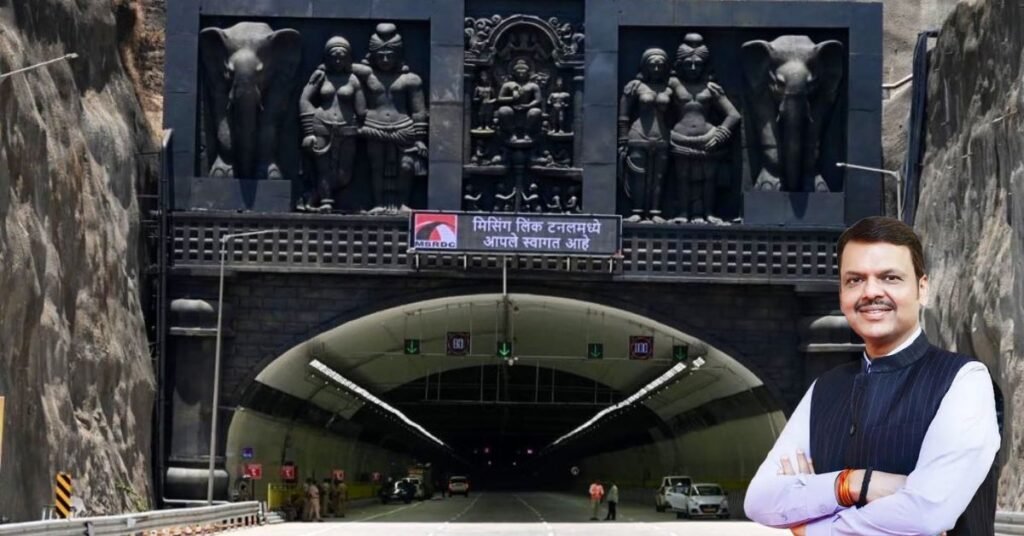
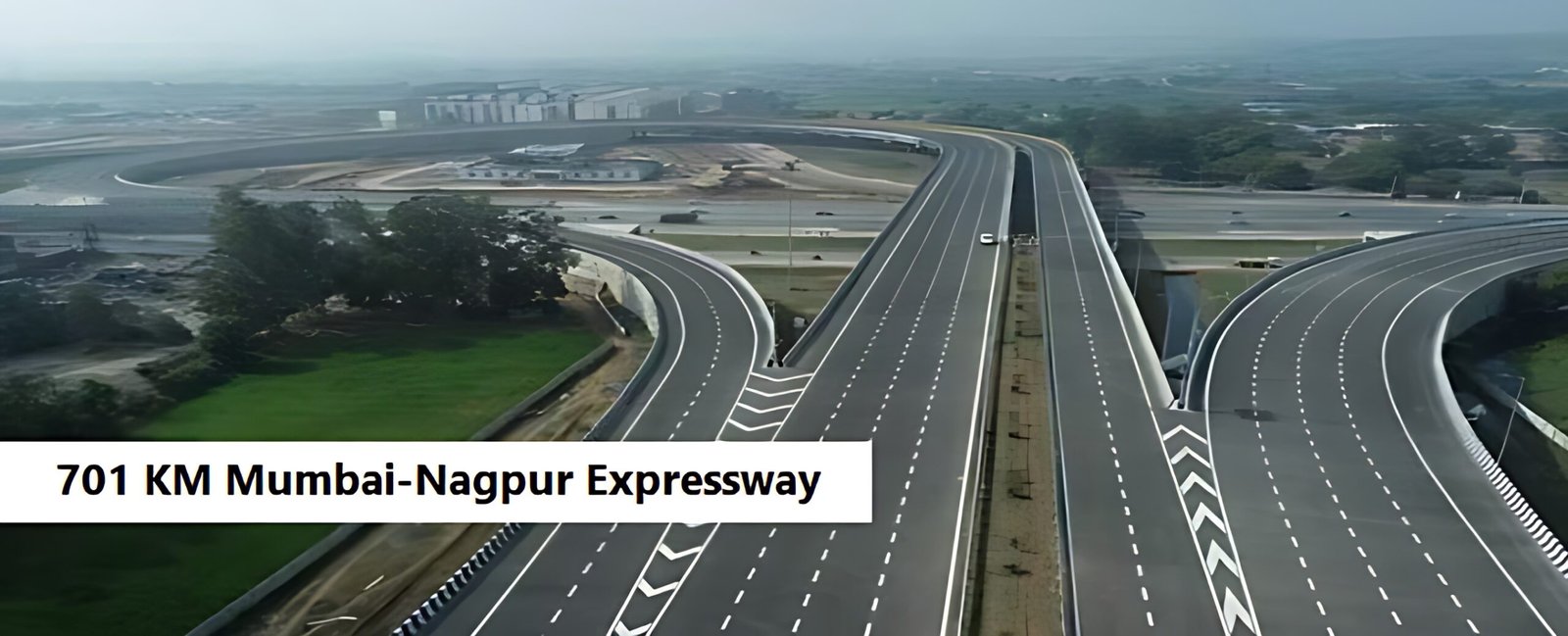
The 701-kilometre, six-lane Nagpur–Mumbai expressway links nearly 390 villages and key industrial zones spread across 10 districts. In addition to enhancing intra-state connectivity, it integrates seamlessly with major national infrastructure networks such as the Delhi-Mumbai Industrial Corridor, the Western Dedicated Freight Corridor, dry ports located at Wardha and Jalna, and the Jawaharlal Nehru Port Authority in Mumbai.Designed with a strong focus on efficiency and safety, the highway features service lanes on both sides, with multiple underpasses ensuring smooth local connectivity. It includes over 50 flyovers, 25 interchanges, and several tunnels at key stretches. The road’s high traffic-handling capacity ensures that movement on flyovers and underpasses remains uninterrupted even during peak hours.
The expressway has been developed to international benchmarks, incorporating aesthetic landscaping, advanced tunnel illumination, and modern digital signboards. Automated toll collection systems have been installed for seamless transit. For safety and emergency response, CCTV surveillance and helpline booths are positioned every five kilometres. In extraordinary circumstances such as natural disasters or defence emergencies, certain stretches are designed to facilitate aircraft landings. The corridor also provides space for essential utilities like fibre-optic cables, gas pipelines, and power transmission lines.Officially named the Hindu Hrudayasamrat Balasaheb Thackeray Samruddhi Mahamarg, this six-lane (expandable to eight lanes) super expressway stands as a landmark achievement in infrastructure planning and execution.
The project is often described as historic for multiple reasons. It is regarded as one of the most expensive infrastructure undertakings in India, built to global quality standards and completed within an unprecedented timeframe, despite delays caused by the COVID-19 pandemic. The administration led by Devendra Fadnavis successfully addressed two major obstacles that frequently stall mega projects—land acquisition challenges and implementation delays.
Remarkably, nearly 80 percent of the required land was secured within a year, reflecting strong administrative coordination and decisive leadership. The same determination was visible in ensuring that a project of such enormous scale progressed swiftly toward completion, setting a new benchmark in infrastructure development.
Application of land pool model for land acquisition of Samruddhi Highway
Developing infrastructure on such a massive scale required acquiring extensive land parcels across several districts, stretching over hundreds of kilometres. Projects of this nature are rarely straightforward; they frequently face prolonged litigation, administrative delays, and political opposition. Moreover, for many farmers and property owners, land is not merely an asset—it represents their primary source of income, financial stability, and social identity.The administration led by Devendra Fadnavis aimed to strike a careful balance. While it was committed to offering just and transparent compensation to affected farmers and landholders, it also had to ensure that the overall expenditure of the project remained financially sustainable.
To address both concerns, the government introduced an innovative approach by forming a land pool based on voluntary participation, alongside acquisitions carried out under the provisions of the Right to Fair Compensation and Transparency in Land Acquisition, Rehabilitation and Resettlement Act, 2013.This land pooling model enabled the state to secure the necessary land for the expressway and related infrastructure without inflating project costs beyond planned limits. At the same time, landowners who chose to participate voluntarily were offered multiple advantages, ensuring that they too shared in the long-term benefits arising from the development.
The land pooling scheme for the Samruddhi Mahamarg has provisions for the refund of land to the land owners in the form of developed non-cultivated plots. If the plot given by the government does not get the market value, then the plot can be repurchased by the government. Similarly, there is also a provision for giving annual subsidies for the land. Along with the land, the value of orchards, wells, pipelines, and other types of constructions on the land will also be payable. Through the policy of land pulling, the government took care that the farmers would not suffer. In fact, the government also decided to give five times more developed land (NA land) in the same area as ownership rights.
In some districts, the state government paid the land price to the farmers using the ready reckoner rate. It also includes trees, houses, wells, and other farm assets on the land. Even double the earlier value or 100 percent compensations have been provided in some places. Some farmers were paid 5 times more than the original price of their land. At the same time, the government will need as much land as the farmers.
However, in the beginning phase, there were some strong protests from farmers of Vidarbha, Aurangabad, and Nashik, instigated by the opposition parties. A series of rallies and demonstrations took place based on the wrong narratives that lands were being grabbed without the consent of the farmers.
There came the deft handling and political maneuvering by CM Devendra Fadnavis to steer clear all obstacles, mustering the absolute allegiance of his cabinet colleagues, MLAs, and local groups to help clear all doubts of the farmers and gain their confidence.
The construction of the highway was also executed at express speed during the chief ministership of Devendra Fadnavis. He took oath as Chief Minister on 31st October 2014, announced the decision for construction of the Nagpur-Mumbai Super Communication Expressway in the Legislative Assembly on 31st August 2015, and completed
100% land acquisition for the project in June 2019 through a court order, thus completing the humongous task of land acquisition for the whole project within 1 year.
Bhoomipujan for the project was done by the Prime Minister Shri Narendra Modi on 18th December 2018 and the 502 km long 1st phase of Nagpur-Mumbai Samruddhi Mahamarg was inaugurated by Prime Minister Narendra Modi himself on 11 December 2022, connecting Nagpur and Shirdi. The second phase (80 km) connecting Shirdi and Bharvir was opened on 26th May 2023, while the final phase is expected to be opened in October 2024. However, the Fadnavis government completed the work of this highway in minimum time.
Fair compensation to farmers for land acquisition
It is jokingly said that no government project is completed on time. But Samruddhi Highway was an exception to this. Acquiring land from the farmers for projects has always been a big headache for the government. However, the Fadnavis government’s focus on development and a sincere approach helped acquire the land in record time.
Farmers were also compensated fairly without any loss. The government allocated Rs 5,285.94 crore for land acquisition from farmers. District-wise spending of the fund as follows:
- Buldana – 613.67 crore
- Aurangabad – 1190.08 crore
- Washim – 397.32 crore
- Nashik – 876.26 crore
- Amravati – 285.69 crore –
- Wardha – 370.00 crore
- Thane – 597. 83 crores
- Jalna – 373.01 crores
- Ahmednagar – 283.43 crores, and
- Nagpur – 293.65 crores
The land acquisition in different districts in hectares (ha):
- Buldana – 1000.36 ha
- Aurangabad – 938.06 ha
- Washim – 910.67 ha
- Nashik – 813.69 ha
- Amravati – 723.16 ha
- Wardha – 521.87 ha
- Jalna – 334.66 ha
- Ahmednagar – 264.14 ha
- Thane – 363.64 ha, and
- Nagpur – 187.49 ha.
A total of Rs 25,000 crore has been earmarked by the state government for land acquisition for the Nagpur-Mumbai Samruddhi Highway.
For the development of the Hindu Hrudayasamrat Balasaheb Thackeray Samruddhi Mahamarg and the proposed Krishi Samruddhi Nagar along with other supporting infrastructure, the State Public Works Department required approximately 49,110 acres of land—close to 20,000 hectares in total. Of this, nearly 9,900 hectares were earmarked for the expressway itself, around 10,000 hectares for the Krishi Samruddhi Nagar project, and about 145 hectares for additional amenities and infrastructure along the corridor.
The state government secured this land through a combination of land pooling and direct acquisition. Under the leadership of Devendra Fadnavis, compensation rates for outright purchases ranged between ₹40 lakh and ₹85 lakh per hectare. For cultivable land, the district collector determined a standard rate of ₹50 lakh per hectare. Farmers owning horticultural land in tribal regions were compensated at one-and-a-half times the standard rate. In certain cases, where fruit-bearing trees were present, compensation was doubled to account for the additional value.
Through this structured and comparatively generous compensation framework, the Samruddhi project was positioned as mutually beneficial—ensuring fair returns to farmers while enabling comprehensive infrastructure-led growth for the state.