Empowering women is widely regarded as the foundation for meaningful change at the grassroots level of society. After resuming office as Deputy Chief Minister and Finance Minister of Maharashtra, Devendra Fadnavis introduced several focused measures in the 2023–24 state budget aimed at strengthening women’s role in development. His return to the finance portfolio followed the end of the two-and-a-half-year tenure of the Maha Vikas Aghadi government.The 2023–24 financial plan was described as pathbreaking because it was reportedly drafted after inviting suggestions and inputs from citizens—an approach presented as a first for any state budget in India. Termed the “Panchamrut Budget,” it outlined five priority sectors: agriculture, infrastructure, empowerment of women and backward sections, environmental sustainability, and employment creation.
While political discourse frequently highlights women’s empowerment, supporters argue that past administrations rarely translated the rhetoric into structured financial commitments. Traditionally, budgets did not earmark a distinct allocation exclusively for women-centric initiatives. Departing from this practice, Fadnavis provided for dedicated budgetary provisions aimed specifically at schemes designed to uplift women across the state.In his budget address, he also underscored the importance of formulating a comprehensive state policy on women’s empowerment. The intent, as articulated, was to institutionalize the approach—ensuring that successive governments would be obligated to include a separate and consistent financial allocation for women-focused programs each year.
50% discount for women in state transport bus fares
The announcement of a 50% concession on State Transport bus fares for women received an overwhelming response across Maharashtra. Within just a week of its rollout, nearly 80 lakh women reportedly availed themselves of the facility, reflecting how quickly the benefit resonated with working women and girl students who depend on daily travel. The scale of participation was seen as clear evidence of the scheme’s immediate popularity.
In addition, the government introduced a welfare initiative titled “Lek Ladki,” designed to support girls from economically weaker families holding yellow and orange ration cards. The program provides financial assistance at key stages of a girl’s life. A sum of ₹5,000 is granted at birth, followed by ₹4,000 upon admission to Class 4, ₹6,000 when entering Class 6, and ₹8,000 at the start of Class 11. Upon attaining the age of 18 years, the beneficiary receives a final amount of ₹75,000.Through this structured financial support, the scheme aims to ease the economic burden on low-income families raising daughters, offering assistance from birth through crucial educational milestones and into adulthood.
Establishing SHGs to make women self-reliant
Around 37 lakh women across the state have moved towards financial independence through participation in Self-Help Groups (SHGs), marking a significant stride in grassroots economic empowerment. These collectives have enabled women to generate income, build entrepreneurial skills, and strengthen their role in local economies.To further expand their opportunities, the state plans to allocate dedicated spaces for SHGs in key commercial clusters over the coming year. These include the Bamboo Cluster in Latur, the Kolhapuri Chappal Cluster in Kolhapur, and the Unity Mall in Mumbai. By providing structured platforms in these prominent hubs, the initiative seeks to give SHG members greater visibility, improved market access, and enhanced avenues to promote and sell their products.
1 percent discount on stamp duty for women home buyers
The Government of Maharashtra introduced a 1% reduction in stamp duty specifically for women purchasing property. This concession is available only when the property transfer or sale deed registration is carried out in the name of one or more women, thereby encouraging female ownership of homes and strengthening their financial security.
In a separate step aimed at supporting grassroots women workers, Devendra Fadnavis approved an increase in honorariums for thousands of frontline functionaries. Around 81,000 ASHA workers and 3,500 group promoters benefited from the revision. The monthly payment for ASHA workers was raised from ₹3,500 to ₹5,000, while group promoters saw their remuneration rise from ₹4,700 to ₹6,200.Similarly, Anganwadi staff also received enhanced compensation. Anganwadi workers’ honorarium was increased from ₹8,325 to ₹10,000, mini-Anganwadi workers’ pay went up from ₹5,975 to ₹7,200, and Anganwadi helpers’ remuneration was revised from ₹4,425 to ₹5,500. Through these measures, the administration aimed to extend tangible financial support to multiple categories of women engaged in essential community services across the state.
New tourism policy for women’s safety
The state administration is in the process of formulating a fresh tourism framework that prioritizes women’s safety while traveling. As part of this initiative, dedicated and secure accommodation facilities—referred to as “Matri Kondas”—are proposed to be established at key locations across cities. These spaces are envisioned as safe homestays or hostels exclusively for women, including provisions that allow working mothers to comfortably nurse their infants without inconvenience.
In addition, the government plans to set up 50 “Shakti Sadan” centers throughout Maharashtra. These facilities are intended to support orphaned, abandoned, and distressed women, including survivors of domestic and sexual violence. Beyond offering essential needs such as food, clothing, and shelter, the centers will extend legal assistance, educational support, skill training, and a monthly stipend of ₹500 to help residents rebuild their lives with confidence.Through these measures, backed by the leadership of Devendra Fadnavis, the objective is to ensure that vulnerable women are not only protected but also empowered with dignity and meaningful opportunities for a fresh start.
The ‘homes are safe when mothers are safe’ program will be launched
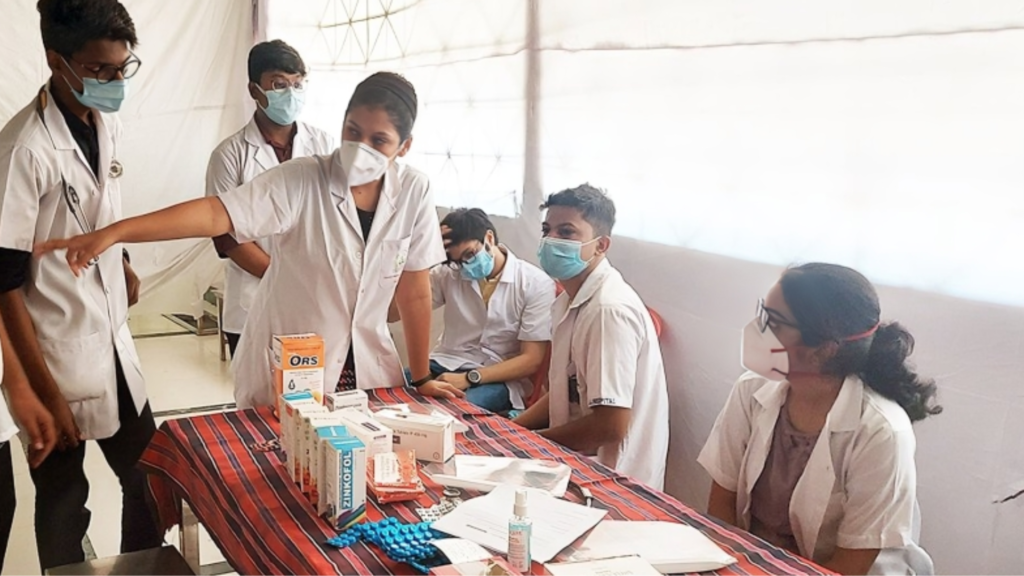
The “Mata Surakshit, Ghar Surakshit” initiative in Maharashtra has been designed to strengthen maternal and infant healthcare by encouraging safe pregnancy practices and minimizing risks during childbirth. Functioning under the broader framework of the National Health Mission, the program places special emphasis on institutional deliveries and systematic postnatal care, particularly for women from vulnerable sections. As part of this outreach, nearly four crore women and girls are to receive free health screenings and necessary medicines. Additionally, expectant mothers will undergo focused medical examinations through the “Thyroid Mukt Maharashtra” drive to detect and treat thyroid-related complications during pregnancy.
Supporters assert that these measures are not merely symbolic announcements but are being carried out with seriousness at the grassroots level. Devendra Fadnavis ensured sufficient financial allocations in the state budget to safeguard women at every stage of life—from the birth of a girl child and her education to marriage, motherhood, and even old age. The policy direction signals a commitment to stand consistently with women across social and economic circumstances.
In order to enhance safety, it has also been decided to install CCTV surveillance across school and college campuses to curb harassment and violence against women. Following the tragic case of Shraddha Walker, the administration announced its intent to introduce stringent legislation addressing what it terms “Love Jihad.” Until such a law is formalized, authorities have been instructed to coordinate with families in sensitive cases, ensuring that the woman’s consent and independent choice are ascertained.On a personal note, Fadnavis is often described as a family man—both a husband and father to a daughter. His supporters highlight that he has encouraged his wife, Amruta Fadnavis, to independently pursue her professional ambitions. They view this as reflective of his broader outlook on women’s autonomy and empowerment, which he seeks to promote statewide.Overall, this year’s budget under Fadnavis’ stewardship is presented as one that thoughtfully addresses the concerns, aspirations, and challenges faced by women. Through policy measures, financial commitments, and safety initiatives, it aims to reinforce the dignity, security, and societal participation of mothers and daughters across the state.