The Mumbai city is incomplete without the Mumbai Metropolitan Region (MMR); together, they form the vast and fastest-growing megapolis we commonly refer to as Mumbai. The principal transport links connecting the MMR with the main city are the three arterial suburban rail lines, which serve as critical lifelines for both people and businesses. Handling a massive daily load of 7 to 8 million passengers, the Mumbai suburban train system is recognized as the world’s busiest commuter network. However, managing such an excessive volume while providing nonstop, timely services to distant locations requires a sophisticated infrastructure, specifically through technological modernization and capacity upgradation.
From 2014 onwards, there has been a visible drive toward infrastructure improvement for Mumbai’s suburban services. While new and improved tracks are being added at multiple points, the decades-old signaling and control systems are finally being upgraded to advanced digital systems. Many modernization projects, which remained stalled during the 2009–2014 period due to planning and funding bottlenecks, began receiving rapid approvals after 2014. This shift underscores the benefits of having a dynamic and pro-development leader like Chief Minister Devendra Fadnavis at the helm; his dedicated endeavors breathed new life into the previously stagnant projects of the Mumbai suburban railways.
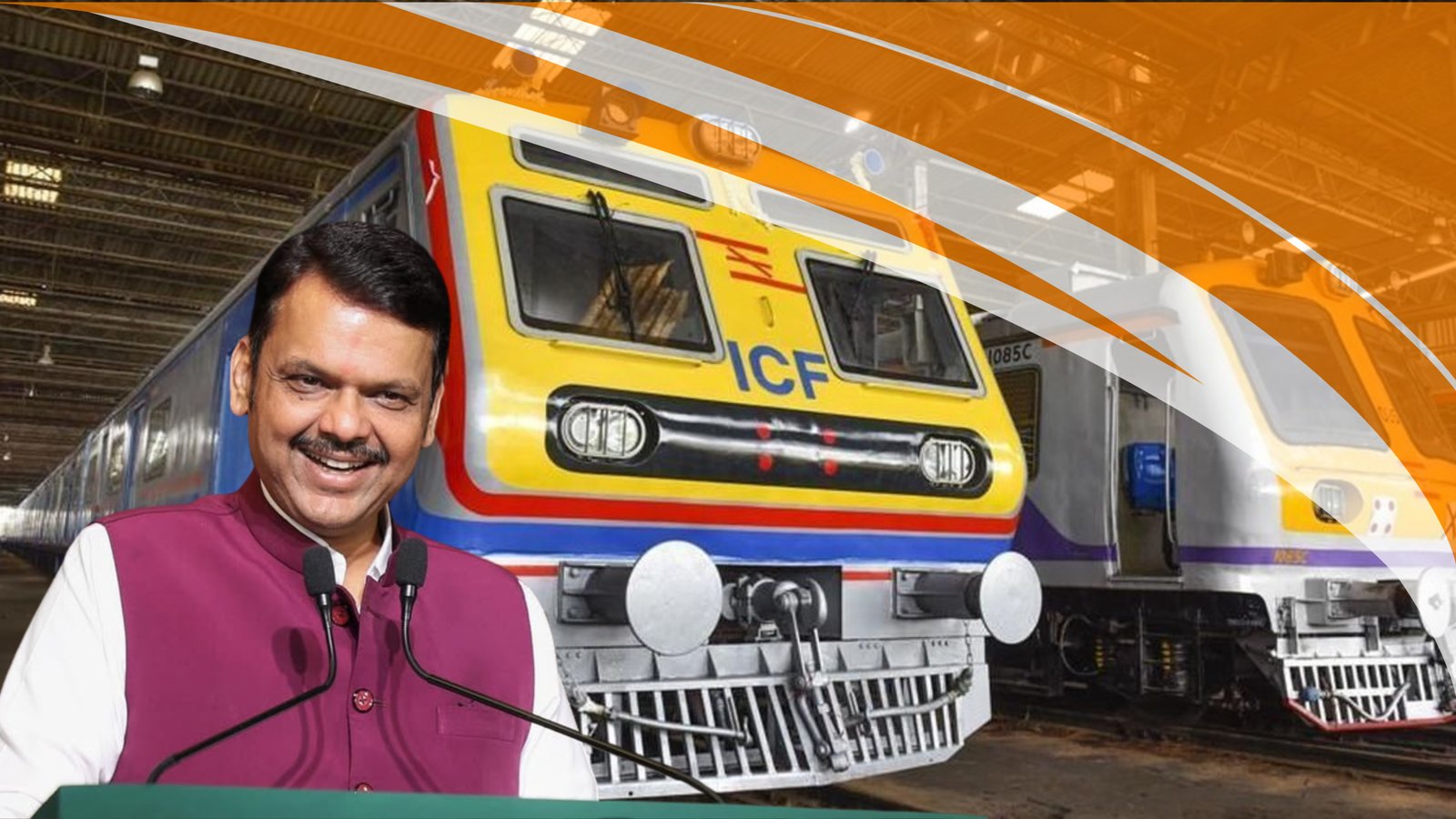
With a manifold increase in the railway budget allocation for Mumbai and Maharashtra, MUTP projects focused on capacity expansion, modernization, safety enhancement, and infrastructure upgrades are now seeing fast-tracked approvals. While the decongestion of routes and improved signaling have allowed the suburban train service to extend its reach beyond the traditional limits of the MMR, passenger comfort and safety have also been prioritized. The introduction of AC trains, escalators at stations, and the widening of platforms are direct results of Devendra Fadnavis’s initiatives to ramp up the modernization of the suburban system. We will explore how this journey of railway development has unfolded since 2014.
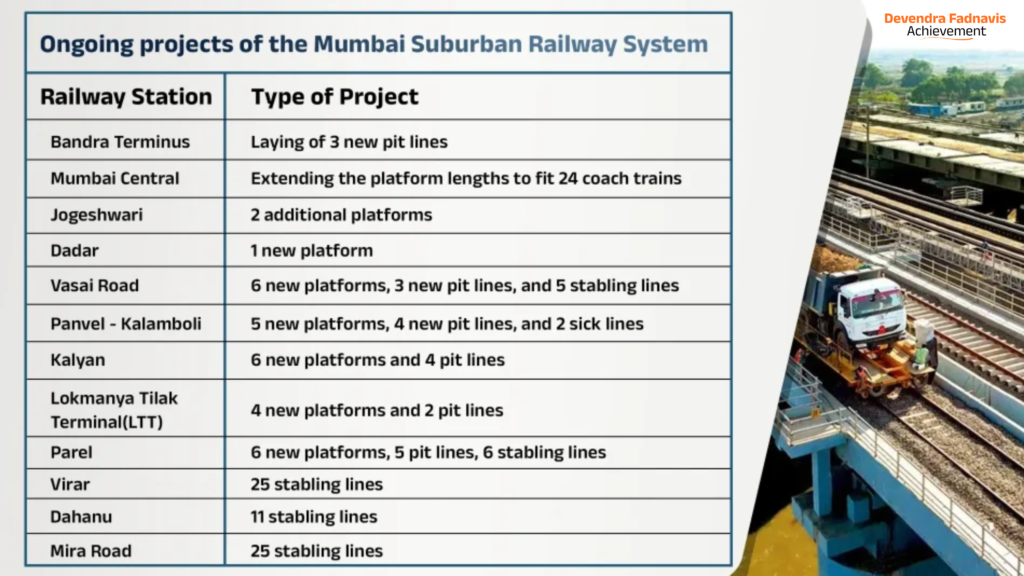
Currently, several major projects by the Mumbai Railway Vikas Corporation (MRVC), including the construction of new lines and the modernization of existing stations, are underway. These efforts are strengthening the infrastructure to transform the suburban railway, the true lifeline of the city. These upgrades will significantly enhance the speed, safety, and comfort levels of the Mumbai local service. Given the extraordinarily high volume of commuters, the immense pressure on the system necessitates regular and robust infrastructural updates.
Thanks to the proactive approach of the Narendra Modi government at the Center and the Devendra Fadnavis government in the State, strategic policy changes and substantial funding have led to significant progress since 2014. For context, between 2009 and 2014, the previous central government allocated an average of only ₹1,171 crore annually for Mumbai’s suburban infrastructure. During that period, the pace of laying railway lines was also sluggish, averaging barely 58 kilometers per year.
After 2014, in his various leadership roles, Devendra Fadnavis made special efforts to secure increased funding from the central government to strengthen Mumbai Railways. In the current financial year (2025-26), Maharashtra has received a record-breaking railway budget allocation of ₹23,778 crore—a twentyfold increase compared to the pre-2014 era. This massive capital infusion will facilitate the proposed expansion of suburban services and ensure a smooth transition to an all-AC local train fleet equipped with automatic door systems for every commuter.