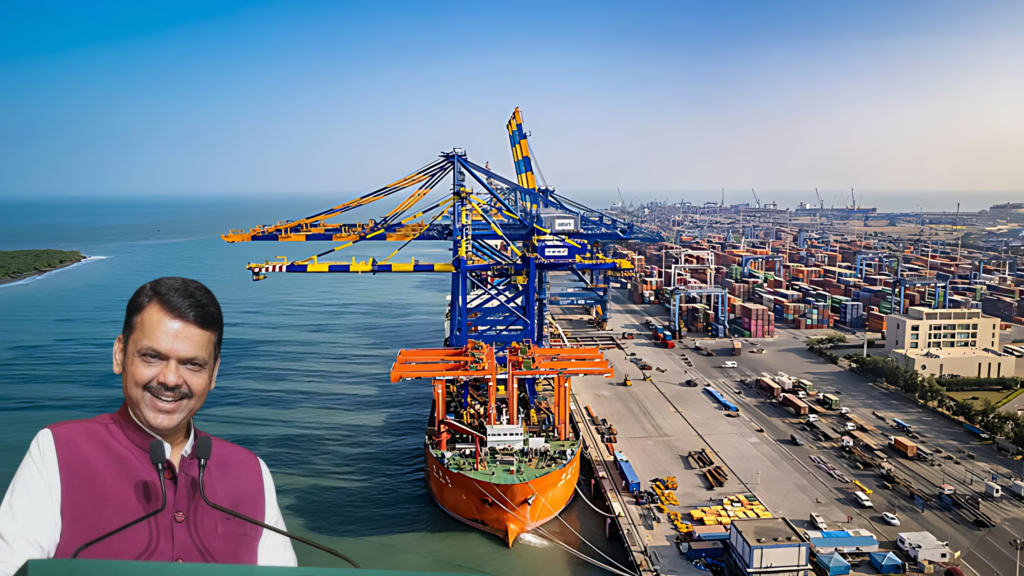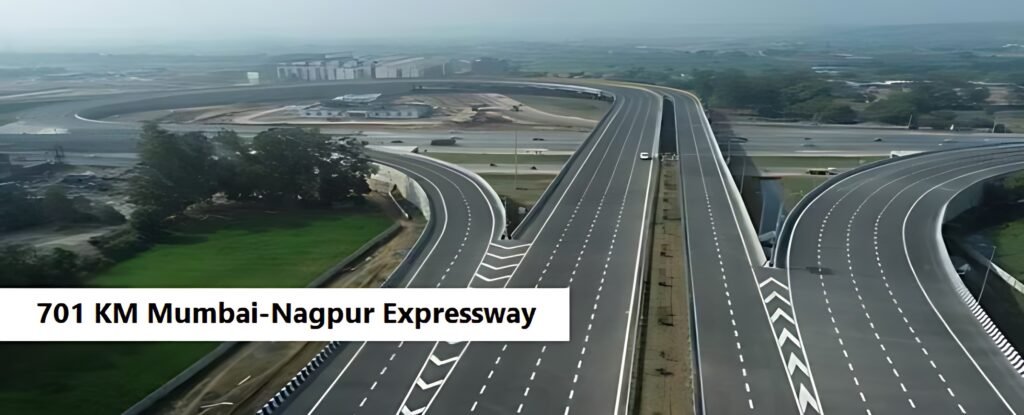
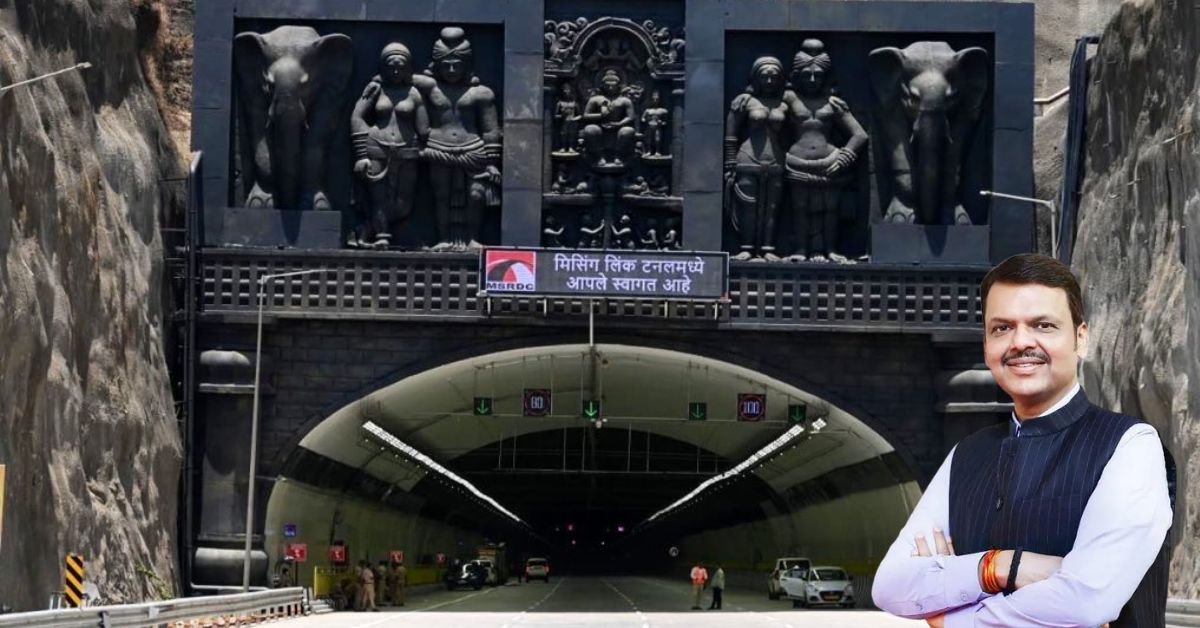
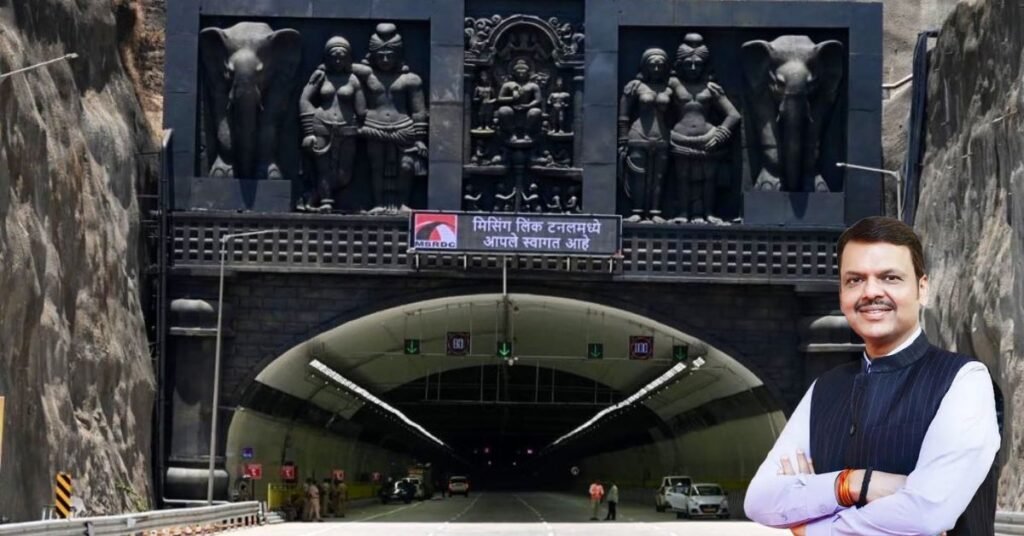
Maharashtra Day, May 1, 2026 In a landmark moment for Maharashtra and India’s infrastructure story, Chief Minister Devendra Fadnavis Ji inaugurated the long-awaited ‘Missing Link’ project on the Mumbai-Pune Expressway on the occasion of Maharashtra Day. The project is not just a triumph of engineering it has simultaneously earned India the title of home to the world’s widest underground twin tunnel, officially certified by the Guinness World Records.
What Is the Missing Link? The Full Story
The Missing Link is a 13.3-kilometre, 8-lane access-controlled corridor developed by MSRDC (Maharashtra State Road Development Corporation). It connects the Khopoli exit to Kusgaon (near Sinhgad Institute), completely bypassing the notorious Khandala Ghat. The new route reduces the total distance by approximately 5.7 kilometres and cuts Mumbai-Pune travel time by 25 to 30 minutes.
Until now, the most dangerous and congested stretch on the Mumbai-Pune Expressway was the 19-kilometre ghat section (Bor Ghat / Khandala Ghat) between the Khopoli exit and Sinhgad Institute a chronic bottleneck where traffic from the 6-lane expressway and the 4-lane NH-48 merged into a dangerous funnel. The same stretch witnessed a catastrophic 32-hour traffic standstill in February 2026 when a flammable gas tanker overturned near the Adoshi tunnel.
That nightmare ends today.
Guinness World Record, The World’s Widest Underground Tunnel
At the inauguration, CM Devendra Fadnavis Ji personally received the Guinness World Records certificate for the ‘World’s Widest Underground Twin Tunnel’ on behalf of Maharashtra. The 8.92-kilometre tunnel, stretching 23 metres in width, now holds a global engineering record. In a powerful symbolic gesture, CM Fadnavis Ji drove through the tunnel himself during the inauguration ceremony.
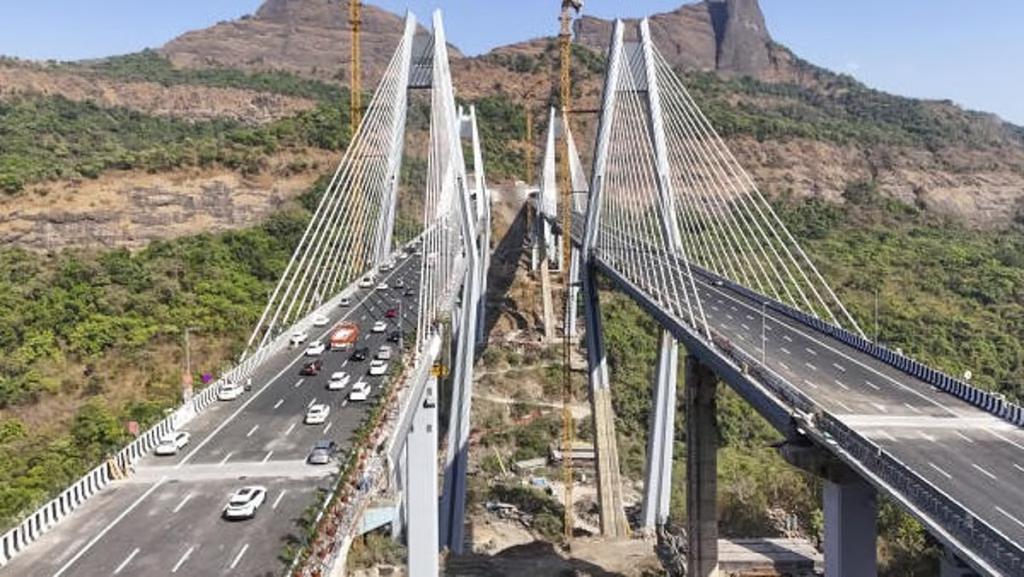
The tunnel passes beneath the vast Lonavala Lake, making it one of the most technically complex tunnelling projects ever executed in India. Its construction required large-scale rock excavation, massive concrete works, and the integration of 180-metre-high viaduct structures — built using Ultra High Performance Fiber Reinforced Concrete (UHPFRC) girders to withstand the extreme terrain of the Western Ghats.
Engineering Numbers That Will Leave You Speechless
The scale of this project is staggering:
- 9 million+ manhours invested in construction
- 8.5 million tonnes of rock excavated
- 7,600 tonnes of steel used
- Advanced NATM (New Austrian Tunnelling Method) with controlled blasting deployed throughout
- Two world-record tunnels measuring 23.75 metres in width
- A breathtaking cable-stayed bridge soaring 182 metres above Tiger Valley
Seven years of construction. Four missed deadlines. Countless engineering challenges beneath lakes, through mountains, over valleys — and the result is a structure the world has never seen before.
In CM Devendra Fadnavis Ji’s Own Words
Addressing the gathering at the inauguration, CM Devendra Fadnavis Ji said:
“This project will not only reduce the distance between Mumbai and Pune it will ensure there is no traffic jam here.”
In a statement that captured the spirit of the moment, CM Fadnavis Ji declared that this project should not be called a ‘Missing Link’ at all “It is a Connecting Link,” he said. A link that bridges the economic heartbeat of Maharashtra its two greatest cities.
What Changes for Commuters?
The impact on daily travel is immediate and significant:
Maximum speed on the new route: 120 km/h compared to just 60–80 km/h on the existing ghat road
Initial phase: Only Light Motor Vehicles (LMVs) and passenger buses will be permitted; heavy vehicles will be allowed in a subsequent phase
Expect occasional short queues at entry and exit points in the early weeks as FASTag readers are calibrated and traffic patterns settle in
For anyone who has spent a Sunday evening in a standstill queue on the Adoshi stretch the relief is visceral and long overdue.
A Proud History India’s First Expressway, Now Reborn
The Mumbai-Pune Expressway holds a special place in India’s infrastructure legacy it was the country’s first expressway, built in 1995 under the Shiv Sena-BJP government, when Nitin Gadkari Ji served as the state’s Public Works Minister. The expressway runs 94 km end to end and has been the economic artery connecting Maharashtra’s two most important cities for three decades.
Today, under the visionary leadership of CM Devendra Fadnavis Ji, this artery has been upgraded into a modern marvel faster, safer, and now globally record-breaking.
A ₹6,695 Crore Investment Maharashtra’s Infrastructure Decade
The Missing Link project, developed by MSRDC, carries a total investment of approximately ₹6,695 crore. It stands as a defining statement in CM Devendra Fadnavis Ji’s infrastructure vision for Maharashtra — a vision that has already delivered the Mumbai Coastal Road, the Atal Setu sea link connection, and now the Missing Link.
Maharashtra is building and the world is taking note.
The Missing Link is more than a road. It is the story of a state that refused to accept its own bottlenecks. Under CM Devendra Fadnavis Ji’s leadership, Maharashtra has not just filled a missing link on a map it has filled a missing link in India’s infrastructure ambition.
SEO Keywords: Mumbai Pune Expressway Missing Link Inauguration, CM Devendra Fadnavis, Missing Link, World’s Widest Underground Tunnel India, Guinness World Record Tunnel 2026, Khandala Ghat Bypass, MSRDC Missing Link Project, Maharashtra Day 2026 Infrastructure, Mumbai Pune Travel Time Reduced.