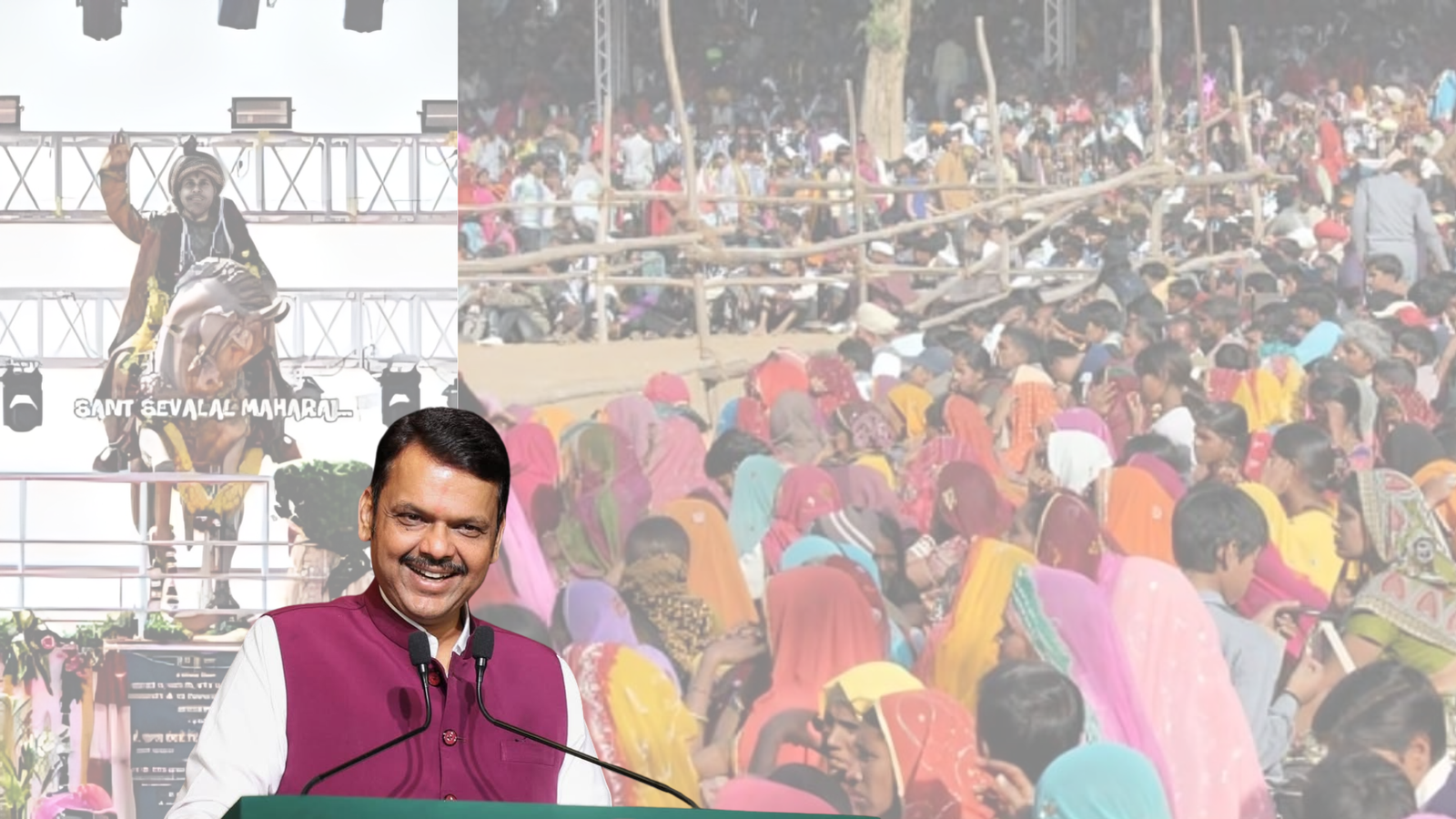
The Banjara community, also known as Lamans, is one of India’s prominent nomadic and semi-nomadic groups with a deep-rooted presence in the country’s cultural and historical narrative. Traditionally, they traveled in groups from region to region, moving in caravans referred to as Tandas, as part of their livelihood practices.In 2024, the Mahayuti Government 1.0 introduced a major initiative aimed at advancing social justice and overall progress for the Banjara community by sanctioning the Sant Sevalal Maharaj Banjara / Laman Tanda Samruddhi Yojana, commonly known as the Tanda Development Scheme. This program was designed not only to promote equity but also to accelerate infrastructure and welfare development within Tanda settlements.The scheme prioritizes the provision of fundamental facilities such as safe drinking water, electricity connections, road infrastructure, educational institutions, and healthcare services. As part of its implementation, the Devendra Fadnavis government has recently cleared development projects amounting to ₹139.35 crore for 1,348 Tandas across the state. Of this allocation, works worth ₹69.68 crore are presently being executed in 16 districts, highlighting sustained efforts to uplift and modernize Banjara settlements.
संत सेवालाल महाराज बंजारा,
— Devendra Fadnavis (@Dev_Fadnavis) February 5, 2024
लमाण तांडा समृद्धी योजना मंजूर
₹500 कोटींमध्ये विविध योजना, सुविधा #मंत्रिमंडळनिर्णय #Maharashtra #CabinetDecision #MaharashtraCabinet #SantSevalalMaharaj pic.twitter.com/74Onzk9HjV
The Sant Sevalal Maharaj Banjara Yojana, also known as the Laman Tanda Samruddhi Yojana, is a fully state-funded initiative aimed at the development of the Banjara community. Approved in the state cabinet meeting on February 5, 2024, the scheme ensures a minimum grant of ₹30 lakh for each Tanda to provide basic amenities.For the financial year 2024–25, projects worth ₹139.35 crore have been sanctioned to improve essential services in 1,348 Tandas across the state.
Mahayuti government’s historic reform – Revenue village status for Tandas
Banjara/Laman community settlements are generally dispersed and, because there has been no proper documentation of their residential areas, many residents have struggled to access government schemes and essential services. To address this issue, the Mahayuti government has introduced a special initiative granting “rehabilitated village status” to Banjara settlements with a population exceeding 350, provided they are situated at least 2 km away from the nearest Tanda, in accordance with Section 4(1) of the Maharashtra Land Revenue Act, 1966.For effective execution of the scheme, district-level committees have been established under the leadership of the Chief Executive Officer of the Zilla Parishad. These committees include officials from multiple government departments, two members from the Banjara community nominated by the Zilla Parishad Chairman, along with other invited representatives. The primary objective of these bodies is to understand the specific needs of Tanda residents and ensure that appropriate facilities and benefits are delivered efficiently.
Changes in old rules; Paving the way for development
According to the Rural Development Department’s government resolution dated February 12, 2004, a settlement was required to have a minimum population of 1,000 and be located at least 3 km away from the nearest village to qualify for the formation of a Gram Panchayat. The Mahayuti government later eased the 3 km distance requirement, enabling a larger number of Tandas to obtain recognition as Gram Panchayats and Revenue Villages.In addition, the state government has sanctioned ₹500 crore exclusively for the development of Tandas inhabited by the Banjara community. Under this allocation, each Tanda will receive ₹30 lakh to create essential infrastructure such as roads, primary health centres, Anganwadi schools, community temples, drinking water systems, and other basic amenities.The Laman Tanda development initiative is benefiting Banjara communities across Vidarbha, Marathwada, North Maharashtra, and West Maharashtra. By taking a policy decision that addresses the real challenges faced by the Banjara/Laman population and ensuring its proper implementation, the Mahayuti government aims to improve their living standards, strengthen livelihood opportunities, and provide legal recognition. Over time, this effort is expected to help integrate the Banjara community more fully into the social mainstream.